I ran the technical marketing function for ServiceNow’s Technology Workflows portfolio across the full arc of enterprise AI. Foundational ML, generative AI, and agentic automation. The buyer was never easy. The product was always real. The job was making both of those things true at the same time, in the same story.
Enterprise buyers had been burned by inflated AI promises long before the technology could deliver on them. I led the technical marketing function responsible for making AI credible inside one of the world’s largest enterprise software companies. For CIOs presenting to boards, for analysts writing Gartner Magic Quadrant and Forrester Wave evaluations, for Global 2000 enterprises making nine-figure platform decisions.
That meant owning the full go-to-market strategy, competitive intelligence infrastructure, analyst briefing program, demo architecture, keynote frameworks, and sales enablement systems across ServiceNow’s Technology Workflows portfolio: ITSM, ITOM, DevOps, AIOps, SPM, Risk, Security, and Operational Technologies. The platform where enterprise cloud, AI, and workflow automation converge at scale. I built the story that moved that product in market, and trained the 3,000 field sellers and 12,000 technical practitioners responsible for delivering it.
Before ServiceNow, I spent a decade running businesses in Tokyo. That chapter gave me B2B market fluency, deep Japanese enterprise culture, and the ability to operate without infrastructure. When ServiceNow expanded in Japan, I came back to the same city in a completely different capacity: training Solution Consultants and building the technical narrative for Japan Tobacco International, Japan Railways, and the broader APAC enterprise market. Two very different versions of Tokyo. One through-line.

Each phase demanded a different narrative posture, because each one inherited what the last one could not solve. Workflow could execute and could not judge. Predictive ML could judge and could not explain itself. Generative could explain and could not be held to account. Agentic could act and could not reliably ground what it acted on. Retrieval is the answer to that last one. That is where the work is now.
Before AI, the work was proving a workflow would execute the same way every time it ran, at enterprise scale, with no room for “usually.” I built and marketed ServiceNow’s ITOM Tier 1 platform: Discovery, Orchestration, Cloud Management, and ServiceWatch, integrated through Integration Hub into SAP, Salesforce, and Workday. That discipline is the reason the agentic narrative that came later was credible. Most people marketing agents in 2026 have never shipped a deterministic system that had to be right every time.
The technology was real but invisible to most buyers. AIOps and predictive intelligence were delivering measurable outcomes for enterprises, but the market had no vocabulary for what it was evaluating. I built the go-to-market strategy and narrative architecture that surfaced those outcomes where buying decisions are actually shaped: Gartner Magic Quadrant positioning, Forrester Wave strategy, analyst briefing programs, and the competitive intelligence infrastructure that established ServiceNow’s credibility before buyers formed their own opinions. The platform underneath the narrative was the same ITOM data model from Phase 00, extended into predictive intelligence.
The category exploded faster than enterprise buyers could process it. Every competitor made the same credibility claim. I led the technical marketing strategy for Now Assist across the full Technology Workflows portfolio, including DevOps, Security, Risk, and Service Management, and built the competitive counter-narrative against a field where differentiation was increasingly difficult to establish. Forrester Wave positioning, analyst relations strategy, and the mainstage keynote architecture for ServiceNow Knowledge in front of audiences ranging from five to twenty-two thousand. Built on the same ITOM and workflow platform, extended with generative capabilities across DevOps, Security, Risk, and Service Management.
This is the hardest version of technical marketing: the category does not exist yet. Buyers are evaluating something they have no frame for. You cannot anchor to familiar comparisons because none exist. You have to build the conceptual scaffolding before you can put a product inside it. At ServiceNow, that meant building the early narrative architecture for Autonomous IT and agentic automation before enterprise buyers had language for what they were being asked to evaluate. The positioning challenge was not differentiation. It was definition. Built the agentic systems the narrative describes: ITSM, ITOM, and OT agents in production at Stellantis by March 2025, the AI Control Tower governing what those agents are allowed to do, and Service Graph cloud discovery across AWS, Azure, and Orca.
The infrastructure question underneath all of it. Agents are only as good as what they can find, and most of the argument about agent reliability is really an argument about retrieval. I now lead positioning and narrative for MongoDB’s multi-cloud intelligent data platform, with a focus on AI search and retrieval: MongoDB Search, Vector Search, and the layer that GenAI, RAG, and agentic applications actually run on. That work is MongoDB’s. It is named here because leaving it out would be the strange choice, not because this site speaks for it.
Technical marketing credibility is earned across multiple contexts and stakes levels, not just inside one company. The combination of enterprise software, entrepreneurial operation, military service, and cross-cultural market experience produces a different kind of strategic instinct than any single track does alone. I am the founding editor of technicalmarketing.org, an independent practitioner publication covering the discipline, published by ThinkRoot. I am a senior technical product marketing manager at MongoDB, working on the company’s multi-cloud intelligent data platform with a focus on AI search and retrieval. This site is personal, and nothing on it is written on behalf of an employer, past or present.
Read Field Notes
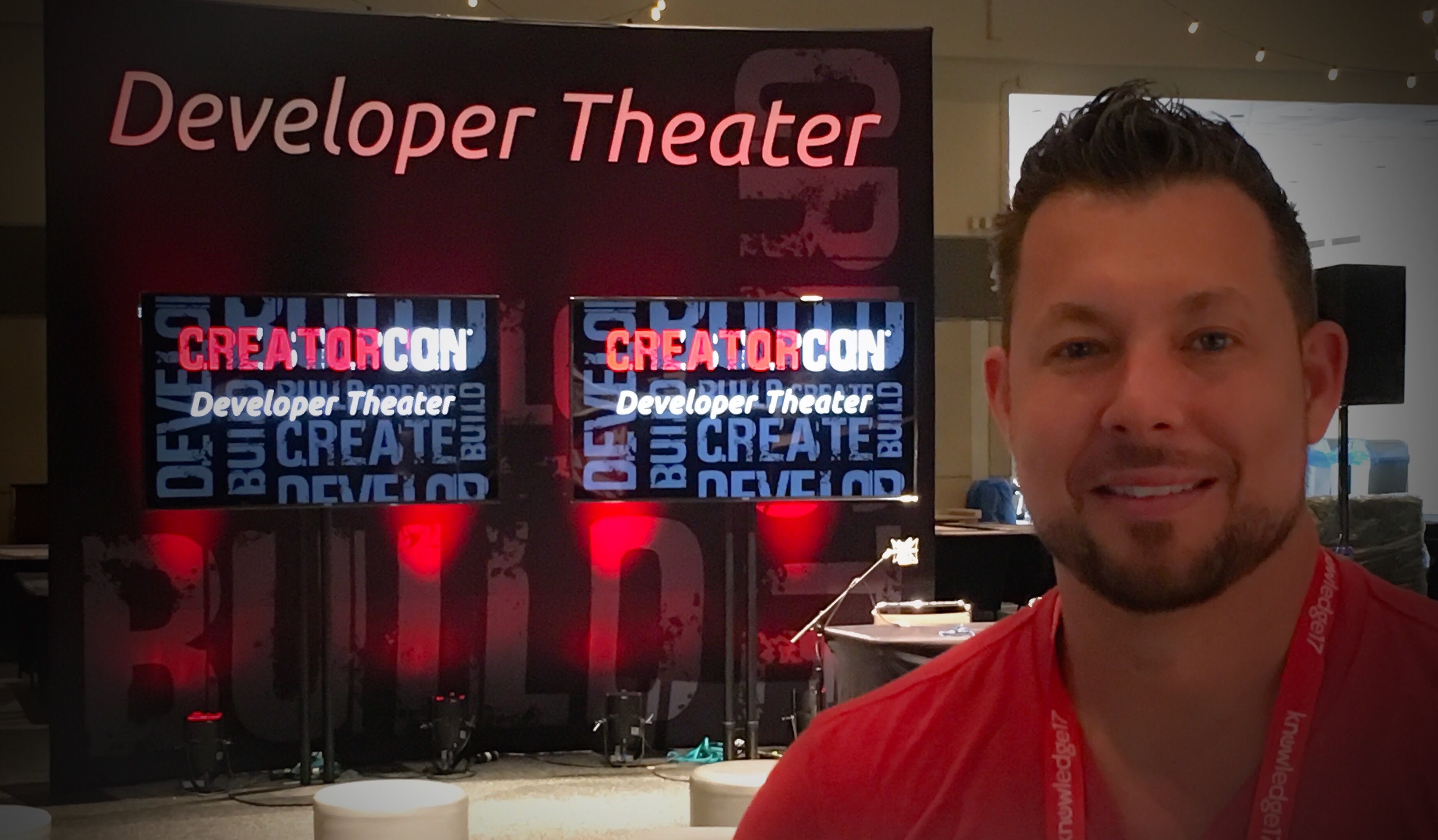
Knee to knee with customers and industry giants, watching them build live demos in real time. The product worked, so the adoption was real. That is where the foundation was set.
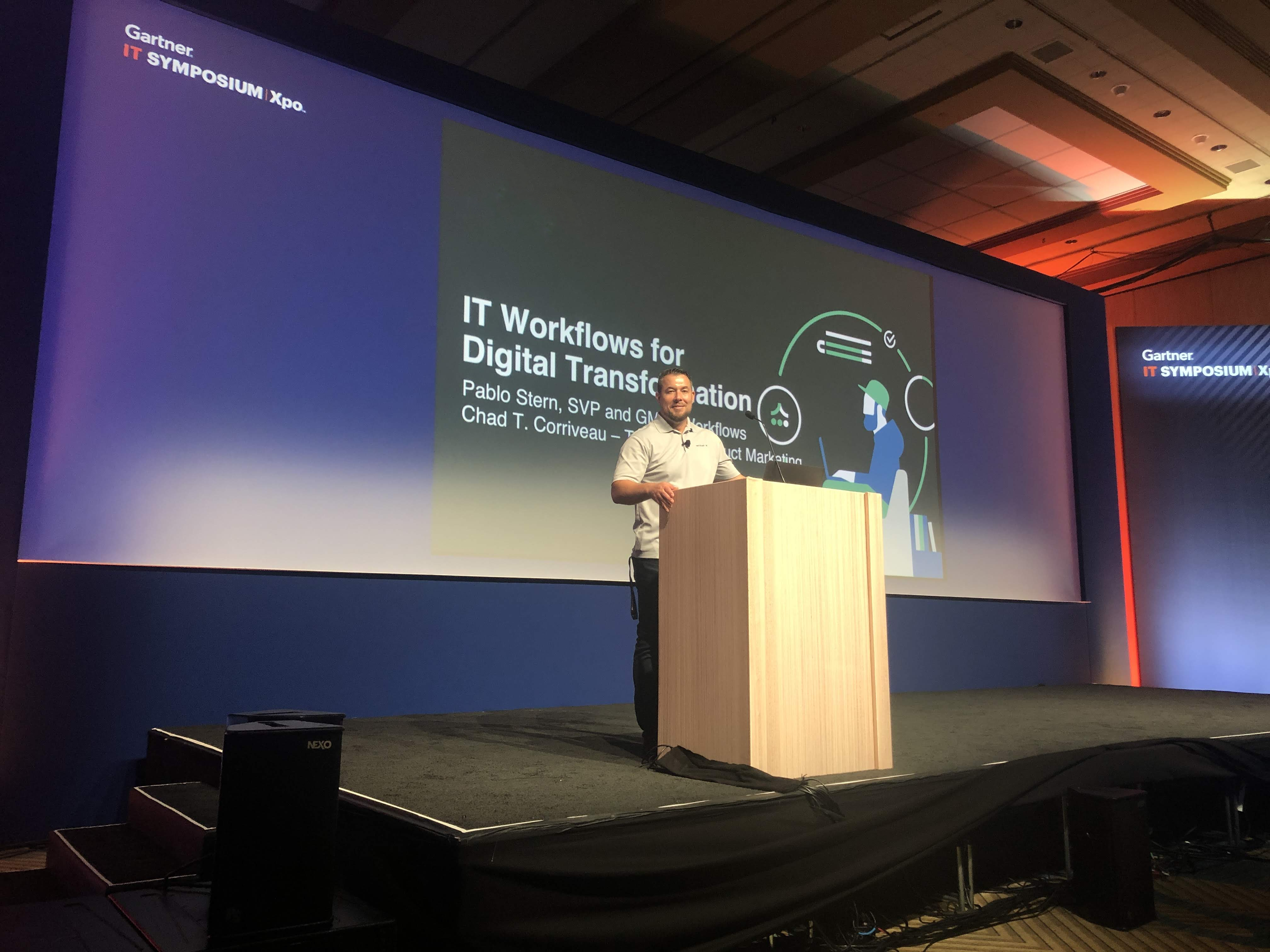
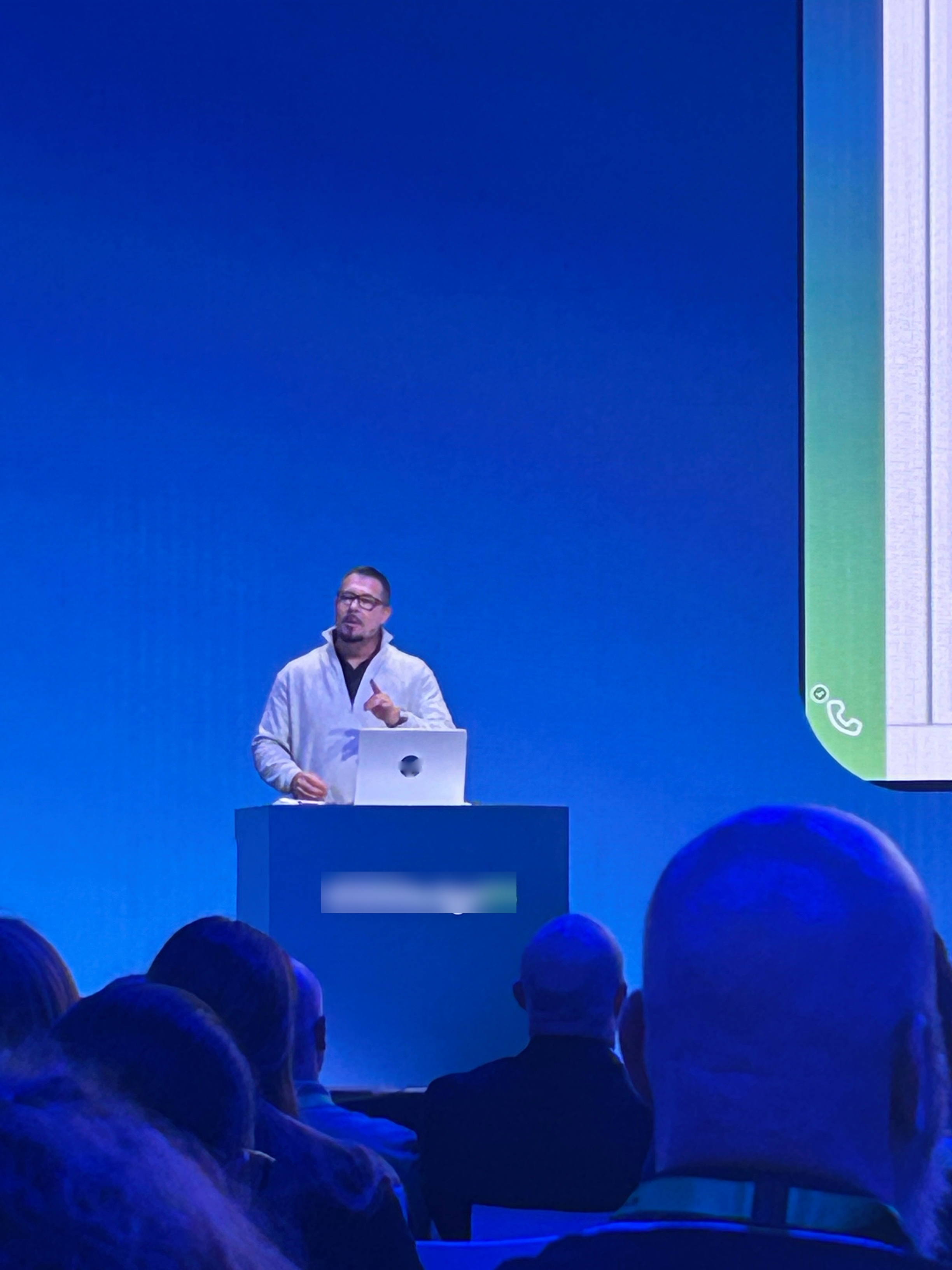
Mainstage keynotes, analyst briefings, and practitioner sessions across Gartner, ServiceNow, and industry forums. Audiences ranging from ITSM practitioners to enterprise CIOs, across five continents.
“Chad brings a rare combination of deep technical acumen, strategic storytelling, and relentless execution. He consistently translated complex product capabilities into compelling narratives that resonated with customers, partners, and internal stakeholders alike.”
George Rubio Director, Head of Outbound Product Management · ServiceNow
“He can dive deeply into the technical underpinnings of the most complex products, all while making that knowledge human, accessible, and easily understood. He’s a gifted speaker, able to lead a presentation or customer conversation with charisma and self-effacing wit.”
Ryan Hammill Principal Creative Director · Ex-Amazon
Just shy of twelve years of enterprise AI narrative, the frameworks that came out of it, and an independent publication covering the discipline. ThinkRoot is not taking client work.