Home About The Work Technical Marketing Field Notes
Demo Intelligence TDCI Framework Score a Demo
Connect

Chad Corriveau  ·  ThinkRoot

The marketing work that was actually built.

A technically superior product is not enough. The market has to learn how to evaluate it correctly. That is the work. If your product is ahead of its story, this is what closing that gap looks like at enterprise scale.

ServiceNow· CERN· The Walt Disney Company· U.S. Air Force· U.S. Army· USAA· GoDaddy· Axway· City of Los Angeles· Fort Worth ISD· American Transmission Co.· MassDOT· Stellantis· Japan Tobacco International· Japan Railways· BT Group· Travelers· PinkVerify· ServiceNow· CERN· The Walt Disney Company· U.S. Air Force· U.S. Army· USAA· GoDaddy· Axway· City of Los Angeles· Fort Worth ISD· American Transmission Co.· MassDOT· Stellantis· Japan Tobacco International· Japan Railways· BT Group· Travelers· PinkVerify·
12
Years inside enterprise AI
doing the actual work
20K+
Attendees at the Knowledge
mainstage keynote
3,000+
Field sellers trained on
the AI platform narrative
3
Analyst evaluation cycles
across MQ and Wave
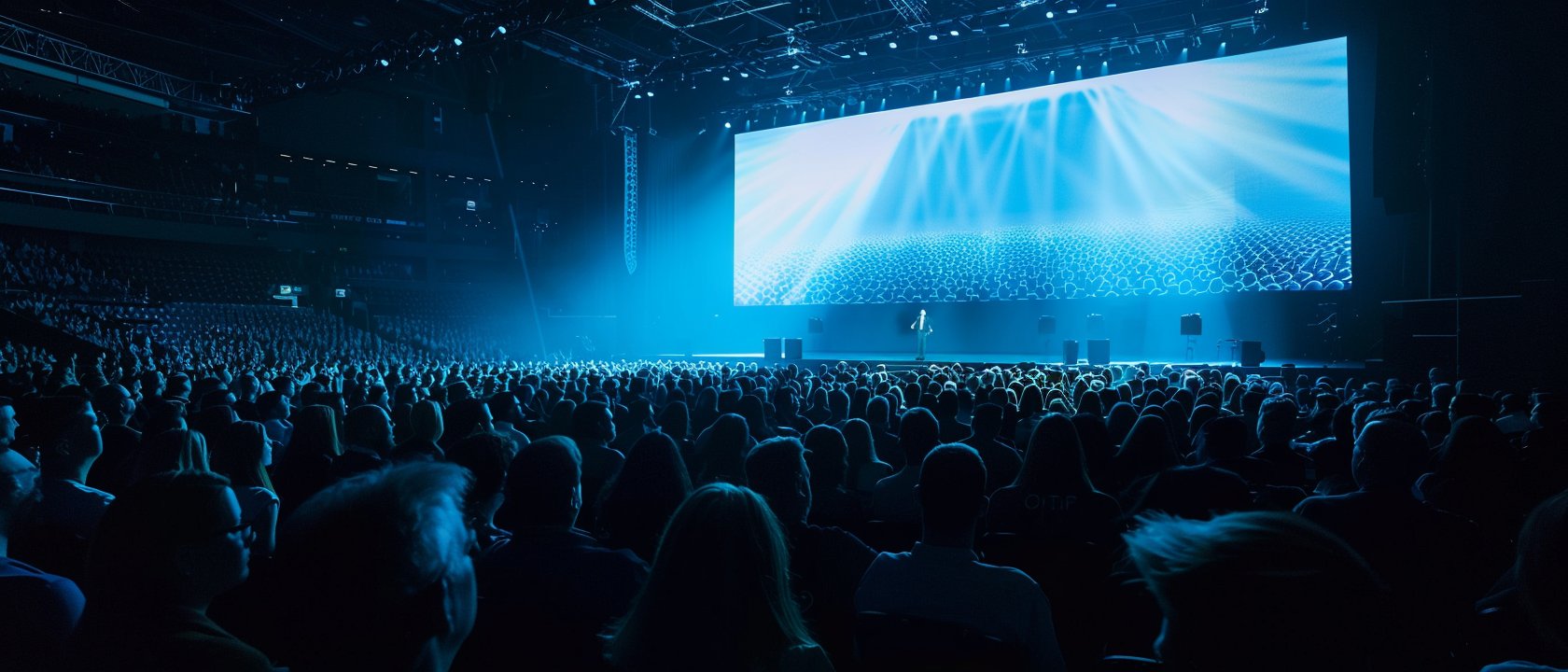
Chad Corriveau enterprise technology conference keynote — 20,000+ attendees, Knowledge mainstage
Chad Corriveau · Knowledge Mainstage
20K+ Live attendees
3 Consecutive years
3,000+ Field sellers trained
12K+ Technical practitioners reached

Three disciplines. One through-line. The principles below are not a methodology deck — they are what each of these cases required in order to work.

01

Start with what the buyer cannot say yet.

The narrative does not begin with the product. It begins with the thing the buyer is trying to believe but does not have language for. The product goes inside that frame, not the other way around.

Demonstrated by
01
AIOps was delivering real outcomes. The market had no vocabulary for what it was evaluating. The Gartner MQ window was closing. Missing it meant giving competitors the credibility foundation before buyers formed their own opinions.
Analyst positioning secured. Market vocabulary built before the RFP cycle. Competitive intelligence infrastructure that gave the field an early-warning system for years.
Analyst Intelligence & Market Positioning
ServiceNow, AIOps & ITSM Portfolio  ·  2019–2022
Gartner MQ Forrester Wave AIOps ITSM Competitive Intel
The Challenge

AIOps and predictive intelligence were delivering real outcomes for enterprise IT. Measurable reduction in incident volume, faster MTTR, proactive anomaly detection. But the market had no vocabulary for what it was evaluating. Buyers were skeptical in a way that was hard to counter. They couldn't picture the capability in their environment because they'd never seen a credible reference for it.

The Gartner Magic Quadrant evaluation was the lever. Positioning in the MQ shapes buyer perception before RFPs go out. Missing the window meant giving competitors the credibility foundation instead.

What Was Built

A full analyst engagement program built as narrative architecture, not a briefing deck. Multi-touchpoint strategy structured around analyst decision criteria, with a competitive intelligence infrastructure that mapped how every major competitor was positioning their ML capabilities and where their narrative was vulnerable. The Forrester Wave strategy ran in parallel: different evaluation criteria, different analyst relationships, different proof point requirements.

Scope & Scale

ServiceNow Technology Workflows portfolio across ITSM, ITOM, AIOps, and predictive intelligence. The competitive intelligence program tracked 14 direct competitors across all major evaluation windows. Analyst briefing programs managed across Gartner, Forrester, IDC, and Omdia simultaneously. Field seller enablement cascaded to 3,000+ reps.

Outcome

ServiceNow established as a credible AI leader in IT operations before enterprise buyers formed their own opinions. Gartner MQ positioning secured. Forrester Wave evaluated favorably. The competitive intelligence infrastructure created a permanent early-warning system for analyst cycle shifts that ran well past the initial engagement.

Chad has a unique strength to think outcomes first, and then layer in the technical requirements to meet those goals.

Matt Gowarty  ·  Director, Product Marketing, IT Operations

14
Direct competitors tracked
A competitive intelligence infrastructure that gave the field an early-warning system for how the category conversation was shifting — months before those shifts hit enterprise conversations.
Axiom Signal  ·  Fictional Case Study  ·  Technical Marketing Architecture View live platform →
The methodology is real. The brand is not. This is what a positioning brief looks like when the category does not exist yet. The platform below is fully interactive.
Technical Marketing Brief  ·  Positioning Architecture  ·  v3.0
Axiom Signal GOVERNED AGENTIC OPS
Move at machine speed. Stay in human control.
SegmentGlobal 2000 IT Operations
StageCategory creation / pre-RFP
Primary motionAnalyst-led, field-enabled
CycleGartner I&O  ·  Predicts 2026
RegulatoryEU AI Act  ·  DORA  ·  NIS2
Agents5 named  ·  6 modules  ·  100% governed
The situation

Three years ago ownership was clear. DevOps owned deployments. Security owned vulnerabilities. IT Ops owned incidents. Each team had its tools, its tickets, its SLAs. The handoffs were messy but the ownership was never in question.

Then the AI agents arrived. Not as a strategy. As a series of individual decisions. Each agent was defensible in isolation. The complexity emerged in the seams.

"The ticket system was built for what humans hand off to other humans. No one designed it for what an AI agent hands off to another AI agent across a team boundary."
The convergence problem
DevOps
Pipelines, deployments, release velocity
Mosaic-3 · Infra opt.
Pipeline monitor
Rollback trigger
Security
Vulnerabilities, compliance, threat surface
Sentinel-1 · CVE response
Relay-9 · Compliance
Blast radius check
IT Operations
Incidents, uptime, service health
Triage-7 · Alert triage
Arbiter-2 · Change mgmt.
SLA monitor
The cross-team agent workflow no one designed
CVE detected Remediation required Emergency deploy Service degraded Incident triggered Who owns this?
3 agents  ·  3 teams  ·  0 defined ownership  ·  1 outage
The positioning architecture
"The workforce is not just humans and software anymore. It is humans, AI agents, and the policies that govern when one can act without the other."
Primary claim  ·  CIO / Board narrative
"By August 2026, EU AI Act enforcement makes human oversight mechanisms and audit trails mandatory for high-risk AI deployments. Axiom Signal is compliant by default, not by sprint."
Regulatory positioning  ·  EU AI Act  ·  DORA  ·  NIS2
"Point solutions do not fail in isolation. They fail at the handoff."
Counter-narrative  ·  All incumbents
Competitive positioning map
ReactiveAutonomous
Axiom Signal
Vendor A
Vendor B
Vendor C
Legacy ITSM
Point solutionPlatform
Buyer architecture
CIORisk reduction, board narrative, AI ROI storyOutcome brief
VP IT OpsMTTR reduction, team capacity, incident volumeDemo script
ArchitectIntegration depth, data model, ML explainabilityTech brief
Plat. Eng.Golden paths, IDP governance, DevOps at scaleIDP architecture
AnalystCategory definition, competitive differentiationBriefing deck
Narrative arc  ·  Analyst briefing to field execution
01
Category brief
Gartner, Forrester, IDC. Define "Governed Agentic Operations" before any vendor does. Shape the evaluation criteria.
02
Mainstage launch
Live cross-team agent workflow demo. One CVE. Three agents. Governed resolution in 90 seconds. No PMM narration.
03
Field enablement
Battlecards per buyer. Demo scripts by team. Objection handling for every incumbent. Rep-executable, no translation required.
04
Customer proof
First reference customer tells the governance story in their language. Outcome replaces positioning. Category becomes real.
The demo architecture  ·  What shipped on stage

One scenario every person in the room had lived: a critical vulnerability at 11pm on a Friday. The old world — three Slack channels, a war room call at midnight, four teams arguing about change windows, resolution in six hours. The Axiom Signal world — three agents under a unified governance policy. Security flagged the CVE. The policy engine evaluated blast radius, scheduled within an approved change window, notified the on-call chain, executed, validated, and closed the incident. Audit trail complete. One human checkpoint. Ninety seconds of observable orchestration.

The demo did not describe the product. It made the audience feel the gap between where they were and where they could be. That is the only demo that works at enterprise scale.

90s
Demo resolution
CVE to closed incident, live on stage. No narration required.
3
Buyer personas served
One demo. Three audiences. Each saw their problem solved.
1
Human checkpoint
Policy-governed approval — not a bottleneck, a proof point.
The platform  ·  Command Center  ·  Live demo environment
axiom-signal  ·  Command Center 3 agents active
Open ↗
312
Active incidents
94.7%
Autonomous resolution
78/100
Security posture
228%
Platform ROI
14,847
Raw alerts
312
Correlated
17
For humans
·
97.9% noise reduction  ·  23s median resolution
Sentinel-1  ·  Security Response  ·  Active
Triage-7  ·  Incident Triage  ·  847 closes
Mosaic-3  ·  Infra Opt.  ·  Idle
Arbiter-2  ·  Change Mgmt.  ·  Escalated
Relay-9  ·  Compliance  ·  Next 3h 47m

Fictional enterprise platform  ·  TDCI demo environment  ·  View full platform →

The test  ·  Field execution, twelve months post-launch
A solution consultant in Singapore closes a Global 2000 deal against a legacy ITSM incumbent. She leads with the governance frame, not the feature list. She positions the category, counters the "we already have automation" objection with the handoff argument, and anchors to the CVE scenario the CIO remembers from the keynote. No PMM in the room. The narrative system shipped.
ThinkRoot LLC  ·  Fictional case study — methodology is real, brand is not  ·  thinkroot.io Explore the platform →
94.7%
Auto-resolution
23s
Median MTTR
228%
Platform ROI
5
Named agents
6
Modules
View full platform →
3K+
Field sellers enabled globally
North America, EMEA, APAC. The platform counter-narrative translated across language and cultural context without losing technical accuracy or competitive precision.

Reverse-engineer the evaluation.

Every buying decision happens inside someone else's framework. An analyst's evaluation criteria, a CIO's risk calculus, a practitioner's prior experience. The work is to understand that framework before writing a word of messaging.

02
Demonstrated by
02
Every enterprise vendor made the same AI claim at the same moment. Differentiation was collapsing across multiple workflow domains simultaneously, each with entirely different buyers, objections, and degrees of AI readiness. CSDM architecture and comms integrations added complexity the category narrative hadn't caught up to.
Platform counter-narrative built around workflow specificity. Forrester Wave secured. 3,000+ sellers deployed with a story that didn't sound like everyone else's.
Now Assist: GenAI Platform Narrative
ServiceNow, Technology Workflows Portfolio  ·  2022–2024
GenAI Now Assist AIOps CSDM Comms Integration Platform Narrative Forrester Wave
The Challenge

The GenAI category exploded faster than enterprise buyers could process it. Every major enterprise software vendor made the same credibility claim simultaneously. "AI-powered," "generative AI built in," "your workflows, now with AI." Differentiation was collapsing as the category accelerated.

ServiceNow's AI story had to work across multiple workflow domains simultaneously: DevOps, Security Operations, Risk & Compliance, IT Service Management, and AIOps. At the same time, the market shift toward distributed work had accelerated demand for native communications integrations across MS Teams, Zoom, and Slack, with CSDM providing the data architecture underneath it all. Each domain had distinct buyer personas, different objection sets, and different degrees of AI readiness. One platform narrative had to be true across all of it.

What Was Built

The cross-portfolio GenAI narrative for Now Assist. A unified positioning architecture that created coherent platform differentiation against a field where every competitor was racing toward identical claims. The counter-narrative was built around workflow specificity: not "AI that does more," but "AI that knows the context of your specific workflow and acts within it." Forrester Wave positioning strategy developed in parallel, with competitive intelligence tracking 11 direct competitors.

Scope & Scale

Full Technology Workflows portfolio spanning IT Service Management, DevOps, Security Operations, AIOps, Risk, and CSDM. Comms integration positioning covered MS Teams, Zoom, and Slack as native workflow surfaces at a moment when enterprise IT was rebuilding how distributed teams operated. Field enablement reached 3,000+ sellers across North America, EMEA, and APAC with role-specific narrative training. APAC coverage included Solution Consultant training in Tokyo for Japan Tobacco International and Japan Railways.

Outcome

Platform differentiation held in a commoditizing market. Forrester Wave placement secured. Field confidence rebuilt after the category acceleration left sellers without a coherent competitive counter-narrative. The workflow specificity frame became the primary competitive positioning across the portfolio and the architecture competitors had to respond to.

He doesn't just know the platform inside and out; he understands what customers need to hear and see to truly get it.

Adam Armstead  ·  Product Design Leader  ·  ServiceNow

◈ ThinkRoot Demo Intelligence

The TDCI measures exactly this — whether a demo script proves the claim or just describes the product. Score yours free in under a minute.

Score your demo →
Chad Corriveau technical marketing keynote speaker at enterprise conference podium
"The demo doesn't describe the product. It makes the audience feel the gap between where they are and where they could be."
Chad Corriveau  ·  ThinkRoot  ·  Demo Craft Principle
20K+
Live mainstage attendees
Three consecutive Knowledge keynotes. One through-line — from the convergence of ITSM and ITOM through GenAI to Autonomous IT. The arc moved deliberately. The field moved with it.
03

Make the demo prove the claim.

A demo that describes a product is forgettable. A demo that makes the audience feel the gap between where they are and where they could be is not. The narrative determines what the demo must prove, not the other way around.

Demonstrated by
03
One stage. 20,000 attendees. The narrative had to carry a story most buyers had no frame for yet: the evolution from Service Operations to Autonomous IT, where IT, OT, and Security agents work alongside humans, on human terms.
Three consecutive Knowledge mainstages. The Autonomous IT arc landed across all three audience types, establishing the category frame before competitors had language for what they were chasing.
Knowledge Mainstage Keynote Architecture
ServiceNow Knowledge Conference  ·  2023–2025  ·  20,000+ Attendees
Keynote Demo Craft Service Operations Autonomous IT OT + Security Agents 20K Attendees
The Challenge

The ServiceNow Knowledge mainstage is one of the largest enterprise software keynotes in the world. 20,000 attendees. IT practitioners, enterprise CIOs, platform architects, press, and analysts, all in the same room for a single 90-minute story. The narrative had to work for all of them simultaneously, which means it could not be optimized for any one of them specifically.

The deeper challenge across all three years was narrating a category that was still forming. The arc moved from Service Operations, the convergence of ITSM and ITOM into a unified operational model, toward Autonomous IT: a world where IT, OT, and Security agents work alongside humans, responding and resolving on human terms without requiring humans to orchestrate every step. Buyers had no mental model for the destination. The story had to build that model before it could put a product inside it.

What Was Built

The full keynote narrative architecture across three years: story structure, scene sequencing, live demo architecture, proof point selection, and the through-line that made the platform story coherent as the category evolved. Year one established the Service Operations convergence story. Knowledge24 built the GenAI and Now Assist layer on top of that operational model, with BT Group and Travelers as the enterprise customer proof points anchoring the IT keynote. Knowledge25 made the case for Autonomous IT, with Stellantis as the anchor customer: IT and OT agents operating in concert with Security, doing work at machine speed while remaining legible and controllable at human scale. The live demo was engineered to be technically credible to practitioners in row 3, comprehensible to an executive who has never seen the product, and generate press-worthy moments on a repeatable basis.

Scope & Scale

Full mainstage narrative from story brief to delivery across three years. Knowledge24 IT keynote: Service Operations convergence with the GenAI and Now Assist layer, anchored by BT Group and Travelers as enterprise customer proof points. Knowledge25 IT keynote: Autonomous IT with Stellantis, positioning IT and OT agents operating alongside Security at machine speed. Post-keynote field enablement cascaded the narrative to 3,000+ field sellers for the next 12 months each cycle.

Outcome

Three consecutive Knowledge mainstages. 20,000+ attendees each year. The Autonomous IT category arc landed coherently across practitioners, executives, and press, moving from Service Operations convergence through GenAI to agentic automation where IT, OT, and Security agents work with humans on human terms. The narrative architecture built for each year became the competitive frame the field carried for the twelve months that followed.

He has helped me many, many times by translating complex technical concepts into clear messages that work for both technical and non-technical audiences.

Bruce Ward  ·  Keynote Demos  ·  DemoEasel Co-founder
Principle 04  ·  The Through-Line

04

The keynote is one day. The field lives in it for a year.

Mainstage work is only complete when the platform story can be carried at individual rep level without the PMM in the room. Field enablement is not a follow-on task. It is the actual deliverable. The three cases above are not separate engagements. They are three phases of one continuous narrative system, and the system is what made each individual piece worth building.

3,000+
Field sellers carrying the narrative
12K+
Technical practitioners enabled globally
12mo
Narrative shelf life per annual keynote cycle
3
AI phases, one continuous through-line
The Field Enablement Architecture
ServiceNow, Technology Workflows  ·  2019–2025  ·  North America / EMEA / APAC
Analyst Positioning → Market Language
The analyst engagement program established the vocabulary before buyers formed their own. What analysts wrote in the Gartner MQ and Forrester Wave shaped what buyers asked for in RFPs. The competitive intelligence infrastructure gave field sellers an early-warning system for how the category conversation was shifting, months before those shifts hit enterprise conversations.
Platform Narrative → Competitive Counter
The Now Assist GenAI narrative gave the field a differentiated answer at the moment every competitor was converging on identical claims. Workflow specificity became the competitive frame. Not a messaging update. A complete repositioning of how the field approached the category, built to survive eighteen months of category noise without being diluted by it.
Mainstage Keynote → Field Narrative
Each Knowledge keynote was engineered to become the field's primary narrative for the twelve months that followed. The arc moved deliberately: Service Operations convergence, then the GenAI layer inside that model, then Autonomous IT where IT, OT, and Security agents work alongside humans on human terms. The post-keynote enablement cascade translated that architecture into rep-level training, competitive battle cards, and demo scripts across North America, EMEA, and APAC. Three years. One through-line from the convergence of ITSM and ITOM to a category that most competitors are still trying to define.
The Test
The field does not need the PMM in the room. When a seller in Tokyo or a solution consultant in London carries the platform story accurately, competitively, and credibly twelve months after the mainstage, the system worked. That is the only measure of whether technical marketing actually shipped.
Geographic Coverage

North America, EMEA, and APAC. Solution Consultant training delivered in Tokyo for Japan Tobacco International and Japan Railways. Field narrative translated across language and cultural context without losing technical accuracy or competitive precision.

The Architecture That Scaled

Analyst briefing programs across Gartner, Forrester, IDC, and Omdia. Competitive intelligence tracking 14 direct competitors. Mainstage narrative architecture for 20,000+ attendees. Post-keynote enablement cascaded to 3,000+ sellers and 12,000+ technical practitioners. One narrative system across all of it.

Next Step

Technical marketing is not a communication problem. It is an architecture problem.

The work above is three versions of the same underlying challenge: a technically superior product in a market that does not yet have the vocabulary to evaluate it correctly. If that is the situation you are in, that is where this work starts.

Advisory

You have a hard positioning problem.

Fractional advisory engagements for technical founders, product marketing leaders, and enterprise GTM teams working through genuinely complex narrative architecture challenges.

Start the conversation →
Speaking

You need a practitioner on stage.

Keynotes, workshops, and breakout sessions for conferences and enterprise events where the audience is technically literate and demands a speaker who has actually done the work.

Speaking inquiry →

Evaluating for a senior role? The work above is the case.  LinkedIn and direct contact are both open.