Portfolio

The marketing work that was actually built.

A product that works is not enough. The market has to learn how to evaluate it. That's the work.

Organizations where the narrative was built and tested
CERN
Disney
USAF
US Army
USAA
MassDOT
Stellantis
Fort Worth ISD
Japan Tobacco
Japan Railways
12+
Years enterprise AI
at ServiceNow
20K
Attendees at Knowledge
mainstage keynote
3K+
Field sellers trained on
AI platform narrative
3
Analyst evaluation
cycles, MQ + Wave
Case Studies

The decisions, the stakes,
and what shipped.

Each case study reflects a real moment where the narrative architecture mattered. Where the wrong story would have cost market position, analyst credibility, or field confidence at scale. Click any card to see the full breakdown.

Evaluation cycle
Gartner Magic Quadrant
Parallel track
Forrester Wave
Market condition
Category without vocabulary
The Challenge

AIOps and predictive intelligence were delivering real outcomes for enterprise IT. Measurable reduction in incident volume, faster MTTR, proactive anomaly detection. But the market had no vocabulary for what it was evaluating. Buyers were skeptical in a way that was hard to counter: they couldn't picture the capability in their environment because they'd never seen a reference for it.

The Gartner Magic Quadrant evaluation was the lever. Positioning in the MQ shapes buyer perception before RFPs go out. Missing the window, or entering it without a coherent analyst narrative, meant giving competitors the credibility foundation instead.

What Was Built

A full analyst engagement program. Not just a briefing deck, but a multi-touchpoint narrative architecture built around analyst decision criteria. This included the competitive intelligence infrastructure that mapped how every major competitor was positioning their ML capabilities and where their narrative was vulnerable.

The Forrester Wave strategy ran in parallel: different evaluation criteria, different analyst relationships, different proof point requirements. The go-to-market messaging for the ITSM and ITOM portfolios was engineered to create coherent signal across both evaluation tracks simultaneously.

The Approach

Analyst positioning is not a presentation problem. It's an information architecture problem. The analysts are building a mental model of your category, and you are competing to be the primary source that shapes it. The work was reverse-engineered from how Gartner and Forrester build their evaluation frameworks, understanding the criteria weighting before writing a word of the narrative.

Customer evidence selection was surgical. Not the biggest logos. The most category-defining outcomes, matched specifically to the criteria signals that carry weight in each evaluation methodology.

Scope & Scale

ServiceNow Technology Workflows portfolio across ITSM, ITOM, AIOps, and predictive intelligence capabilities. The competitive intelligence program tracked 14 direct competitors across all major evaluation windows. Analyst briefing programs managed across Gartner, Forrester, IDC, and Omdia simultaneously.

The field seller enablement built from the analyst positioning cascaded to 3,000+ reps who needed to carry the narrative in enterprise conversations without access to the underlying strategic rationale.

Outcome

ServiceNow established as a credible AI leader in IT operations before enterprise buyers formed their own opinions. Gartner MQ positioning secured. Forrester Wave evaluated favorably. The competitive intelligence infrastructure created a permanent early-warning system for analyst cycle shifts.

Portfolio scope
DevOps, Security, Risk, ITSM
Market condition
Category commoditizing in real time
Field reach
3,000+ sellers enabled
The Challenge

The GenAI category exploded faster than enterprise buyers could process it. Every major enterprise software vendor made the same credibility claim simultaneously: "AI-powered," "generative AI built in," "your workflows, now with AI." Differentiation was collapsing as the category accelerated.

The harder problem: ServiceNow's AI story had to work across five different workflow domains simultaneously. DevOps, Security Operations, Risk & Compliance, HR Service Delivery, and IT Service Management, each with distinct buyer personas, different objection sets, and different degrees of AI readiness. A single platform narrative had to be true across all of them.

What Was Built

The cross-portfolio GenAI narrative for Now Assist. A unified positioning architecture that created coherent platform differentiation against a field where every competitor was racing toward identical claims. The counter-narrative was built around workflow specificity: not "AI that does more," but "AI that knows the context of your specific workflow and acts within it."

Forrester Wave positioning strategy developed in parallel. Competitive intelligence matrix tracking 11 direct competitors across GenAI claims, proof point quality, and analyst coverage gaps. Field seller enablement program that translated the platform narrative into discovery question frameworks and objection-handling language.

The Approach

When a category commoditizes, the defensive move is usually to compete on features. That's the wrong move. The right move is to shift the evaluation frame, to change what buyers are measuring before they lock in their criteria.

The Now Assist narrative did not compete on "which vendor has more AI features." It reframed the evaluation around workflow integration depth, a dimension where point solutions structurally could not compete with a platform that already owned the workflow layer. The Forrester Wave strategy was built around surfacing this as the primary evaluation criterion.

Scope & Scale

Full Technology Workflows portfolio: five domains, multiple product lines, a combined addressable market covering the majority of Global 2000 IT operations spend. The field enablement program reached 3,000+ sellers across North America, EMEA, and APAC with role-specific narrative training built on the platform positioning.

APAC coverage included Solution Consultant training programs in Tokyo for Japan Tobacco International and Japan Railways, translating the GenAI platform narrative for a market with materially different AI adoption readiness and enterprise procurement norms.

Outcome

Platform differentiation held in a commoditizing market. Forrester Wave placement secured. Field confidence rebuilt after the category acceleration left sellers without a coherent competitive counter-narrative. The workflow specificity frame became the primary competitive positioning across the portfolio.

Venue & audience
Knowledge, 20,000 attendees
Audience mix
Practitioners, executives, press
Constraint
No second takes
The Challenge

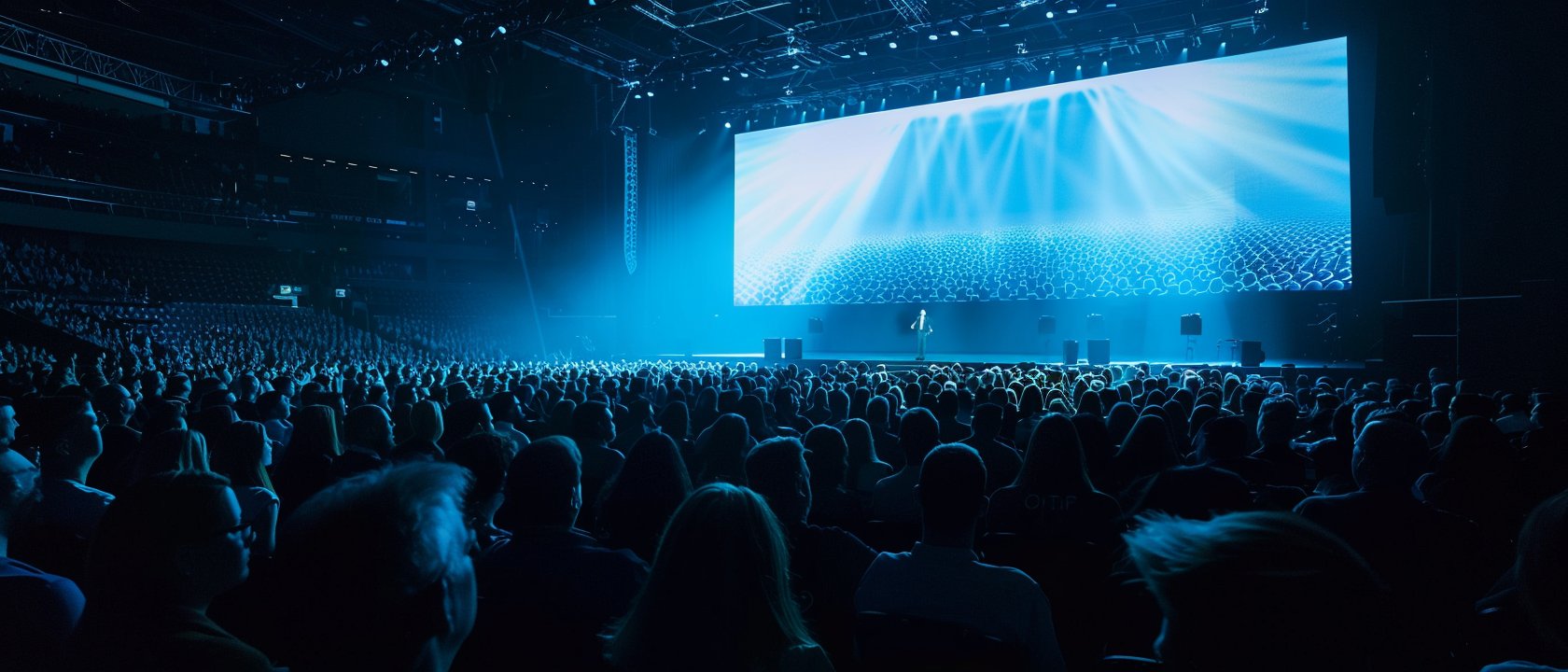
The ServiceNow Knowledge mainstage is one of the largest enterprise software keynotes in the world. 20,000 attendees. IT practitioners, enterprise CIOs, platform architects, press, and analysts, all in the same room for a single 90-minute story. The narrative had to work for all of them simultaneously, which means it could not be optimized for any one of them specifically.

The specific challenge in 2023: ServiceNow was positioning across a portfolio pivot toward GenAI at the same moment every other enterprise vendor was doing the same thing. The mainstage had to land a differentiated story in a context where the entire industry was making noise on the same theme. Skeptics would be skeptical from the first slide.

What Was Built

The full keynote narrative architecture: story structure, scene sequencing, live demo architecture, proof point selection, and the through-line framing that made the platform story coherent across six product areas in a single narrative arc.

The live demo design was a specific discipline: enterprise software demos at mainstage scale must do three things simultaneously. Be technically credible to practitioners in row 3, be comprehensible to an executive who has never seen the product, and generate press-worthy moments on a repeatable basis. The demo narrative for Knowledge 2023 was engineered against all three criteria, not just one.

The Approach

Mainstage narrative architecture starts with a constraint that most people get backwards: the demo does not tell the story. The story determines what the demo can prove. You begin with the claim you need the audience to leave believing, then work backward to the minimum viable demonstration that makes that claim undeniable.

At Knowledge 2023, the claim was specifically about workflow context, that AI built inside your workflow data is categorically different from AI layered on top of it. Every demo scene was constructed to make this contrast viscerally obvious rather than abstractly described. The narrative arc ended with a proof moment that collapsed the distinction between "AI demo" and "my actual work environment."

Scope & Scale

Full mainstage narrative from story brief to delivery. Platform story unified across IT Service Management, DevOps, Security Operations, and HR Service Delivery. Four distinct product areas with different buyers, framed as a single coherent AI platform thesis.

Post-keynote field enablement: breakout sessions, partner briefings, and the narrative training that translated the mainstage story into the discovery and demo language that 3,000 field sellers would use for the next 12 months. The keynote is one day. The narrative lives in the field for a year.

Outcome

Knowledge 2023 mainstage delivered to 20,000 attendees. AI platform story landed coherently across all three audience types: practitioners, executives, and press. The workflow context frame became the core competitive differentiator carried by the field for the following year.

The Approach

Technical marketing is not a communication problem.
It’s an architecture problem.

The work above is not a collection of campaigns. It is three versions of the same underlying challenge: a technically superior product in a market that does not yet have the vocabulary to evaluate it correctly. The job is to build that vocabulary before competitors do, and before buyers form opinions from inferior sources.

ThinkRoot exists to document this process and make the frameworks available to every technical PMM and AI-era founder who is building the same thing right now, at a different company, in a different category.

Read the frameworks in Field Notes
01
Start with what the buyer cannot say yet

The narrative does not begin with the product. It begins with the thing the buyer is trying to believe but does not have language for. The product goes inside that frame. Not the other way around.

02
Reverse-engineer the evaluation

Every buying decision happens inside someone else's framework: an analyst's evaluation criteria, a CIO's risk calculus, a practitioner's prior experience. The work is to understand that framework before writing a word of messaging.

03
Make the demo prove the claim

A demo that describes a product is forgettable. A demo that makes the audience feel the gap between where they are and where they could be is not. The narrative determines what the demo must prove. Not the other way around.

04
The keynote is one day. The field lives in it for a year.

Mainstage work is only complete when the platform story can be carried at individual rep level without the PMM in the room. Field enablement is not a follow-on task. It is the actual deliverable.

The Field Notes newsletter.

Practitioner-built frameworks for technical PMMs and AI-era founders. One idea, worked through completely.

Next Step

If your technical product
deserves a better story,
that starts here.

The conversation is open for PMM teams, founders, and operators who are building something the market hasn’t priced yet.

Start the conversation Read the background